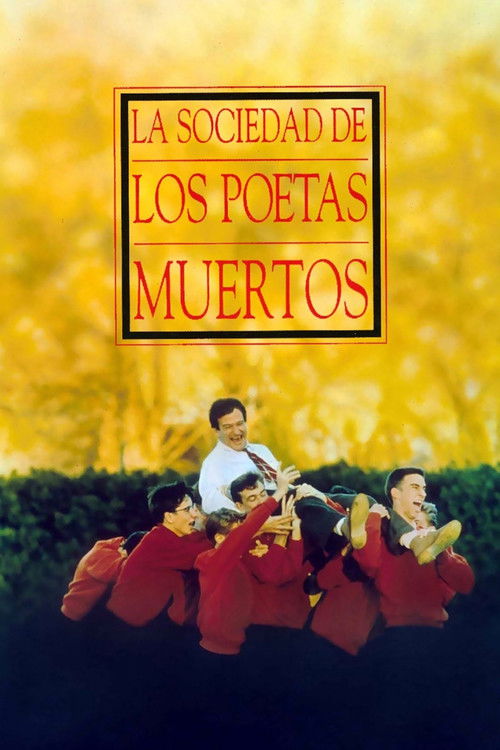
La Sociedad de los Poetas Muertos
Resumen
En un elitista y estricto colegio privado de Nueva Inglaterra, un grupo de alumnos descubrirá la poesía, el significado del "carpe diem" -aprovechar el día- y la importancia vital de luchar por alcanzar los sueños, gracias al Sr. Keating, un excéntrico profesor que despierta sus mentes por medio de métodos poco convencionales.
Reparto principal
Robin Williams
John Keating
Robert Sean Leonard
Neil Perry
Ethan Hawke
Todd Anderson
Josh Charles
Knox Overstreet
Gale Hansen
Charlie Dalton
Dylan Kussman
Richard Cameron
Allelon Ruggiero
Steven Meeks
James Waterston
Gerard Pitts
Norman Lloyd
Mr. Nolan
Kurtwood Smith
Mr. Perry
Carla Belver
Mrs. Perry
Leon Pownall
McAllister
Reseñas
(CASTELLANO) Hay películas que cambian cuando cambias tú. Dead Poets Society es una de esas. Vista hoy, años después, ya no se siente solo como una historia sobre un profesor inspirador, sino como algo más triste, más frágil. La primera vez quizá impacta por el discurso; la segunda vez pesa más el silencio que queda después. La estructura es clara, incluso previsible en algunos tramos, pero eso no le resta fuerza. Peter Weir no intenta disfrazar el melodrama, lo abraza. La película habla de libertad, sí, pero también del miedo a ejercerla. De lo difícil que es salirse del guion que otros han escrito para ti. Y esa tensión, aunque esté subrayada, sigue funcionando. Robin Williams sostiene el conjunto con una interpretación contenida, menos excesiva de lo que a veces se recuerda. No convierte a Keating en un héroe caricaturesco; lo mantiene humano, imperfecto, casi vulnerable. A su alrededor, los jóvenes actores aportan una energía que equilibra el discurso adulto. Hay algo muy honesto en cómo la película muestra esa edad en la que todo parece definitivo. Es cierto que el guion no siempre es sutil y que algunas escenas buscan la emoción de forma bastante directa. Pero, curiosamente, eso no la debilita tanto como podría. Hay momentos que siguen golpeando con la misma intensidad, quizá porque conectan con algo muy simple: la necesidad de encontrar una voz propia. El club de los poetas muertos no es una obra maestra incontestable ni una película perfecta. Tiene costuras visibles y decisiones discutibles. Pero sigue siendo una historia poderosa sobre la libertad individual y sus consecuencias. Esta segunda vez no me ha parecido ingenua; me ha parecido más triste. Y quizá por eso, más valiosa. (ENGLISH) Some films change as you change. Dead Poets Society is one of them. Watching it now, years later, it no longer feels like just a story about an inspiring teacher, but something sadder, more fragile. The first time, it might hit because of its message; the second time, what lingers more is the silence that follows. The structure is clear, even predictable at times, yet that doesn’t strip it of power. Peter Weir doesn’t try to disguise the melodrama; he embraces it. The film speaks about freedom, yes, but also about the fear of actually exercising it. About how difficult it is to step outside the script others have written for you. That tension, even when underlined, still works. Robin Williams carries the film with a restrained performance, less excessive than memory sometimes suggests. He doesn’t turn Keating into a caricatured hero; he keeps him human, imperfect, almost vulnerable. Around him, the young actors bring an energy that balances the adult perspective. There’s something very honest in how the film portrays that age when everything feels final. It’s true the script isn’t always subtle and that some scenes aim directly for emotion. But, surprisingly, that doesn’t weaken it as much as it could. Certain moments still hit with the same intensity, perhaps because they tap into something simple: the need to find your own voice. Dead Poets Society isn’t an unquestionable masterpiece or a flawless film. Its seams are visible, and some choices can be debated. But it remains a powerful story about individual freedom and its consequences. This second viewing didn’t feel naive; it felt sadder. And maybe, because of that, more meaningful.